
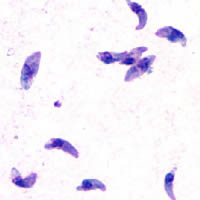
The Parasite in Your Brain
Somewhere between 30 and 40 million Americans are walking around with a parasite lodged in their brain tissue. It got there through cat feces. There is no cure. And until recently, the medical establishment called it "latent" — as in harmless, dormant, not worth worrying about.
That word is aging poorly.
It Is Not Dormant
A January 2026 study from UC Riverside, published in Nature Communications, found that Toxoplasma gondii cysts — the structures the parasite forms inside your neurons — contain at least five distinct subtypes of organisms. They are not sleeping. They are converting between forms, resisting every known drug, and when reactivated, they produce fast-replicating tachyzoites that cause encephalitis and retinal damage.
UC Riverside: "Scientists Find Hidden Diversity Inside Common Brain Parasite"
An earlier 2025 study from the same lab, published in PLoS Pathogens, showed that even a small number of infected neurons has an outsized impact on brain function. The parasite hijacks extracellular vesicles — the tiny packets neurons use to communicate with each other — and stuffs them with its own protein, GRA7. This disrupts glutamate regulation. Excess glutamate causes seizures, neural damage, and altered brain connectivity.
The Numbers
A 2025 systematic review found T. gondii impairs episodic memory, working memory, attention, executive function, and processing speed. The associations with psychiatric conditions are not subtle:
Autism: 4.78x higher odds
Schizophrenia: 3.33x higher odds
ADHD: 2.50x higher odds
OCD: 1.86x higher odds
Antisocial personality disorder: 1.63x higher odds
A March 2025 study published in Acta Psychologica found infected individuals are more likely to be unemployed, suffer financial losses, and have higher rates of traffic accidents and suicide. The parasite synthesizes L-Dopa in the brain — a dopamine precursor — while simultaneously decreasing serotonin and norepinephrine.
PsyPost: "Common Cat Poop Parasite Hijacks Brain Chemistry"
Your Cat Is the Only Definitive Host
Toxoplasma gondii can only sexually reproduce inside the intestines of cats. Every other animal — humans included — is an accidental host. A single infected cat can shed millions of oocysts in its feces over the course of two weeks. Those oocysts survive in soil for over a year. They contaminate gardens, sandboxes, and water supplies.
37.5% of domestic cats are seropositive. 16.2% of soil samples contain oocysts.
No Cure Exists
Once T. gondii forms cysts in your brain and muscles, no existing therapy can eliminate them. The cysts are resistant to all current treatments. They remain for life. The parasite is, for all practical purposes, permanent.
"The parasite may play a larger role in neurological and behavioral conditions than we previously thought." — Emma H. Wilson, UC Riverside School of Medicine
Forty million Americans. No cure. A parasite that rewires your dopamine system, impairs your memory, and increases your odds of a car crash. And people still let their cats use the garden as a toilet.
ScienceAlert: Cat Parasite Can Seriously Disrupt Brain Function