
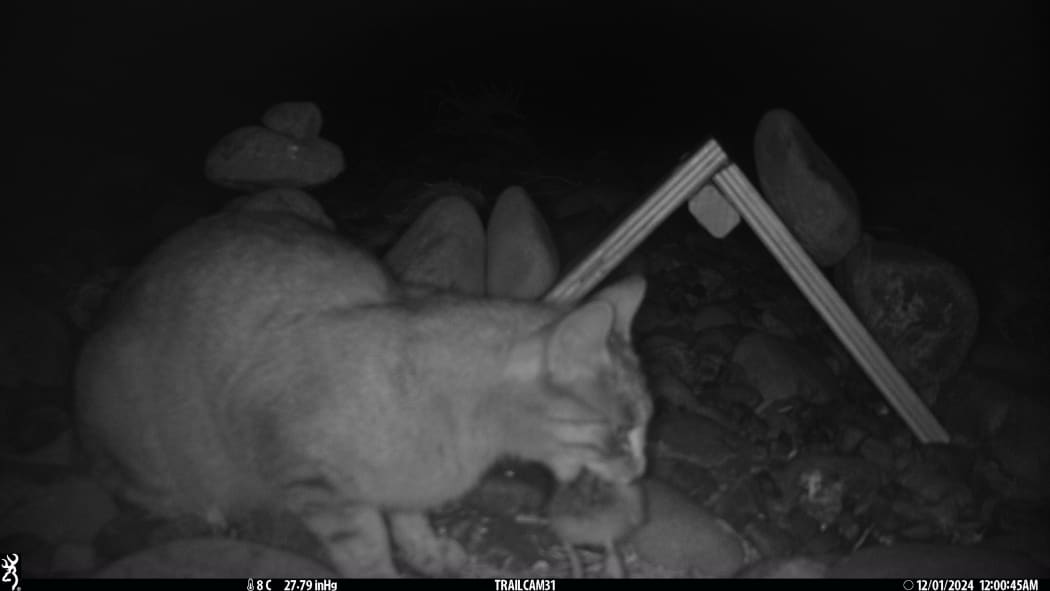
Trail camera captures the 6kg feral tom in the act - preying on black-fronted tern chicks at the Waiau Toa colony. Photo: Department of Conservation
One cat. Ninety-five nests. An entire breeding colony of endangered black-fronted terns - wiped out over a single weekend.
In December 2024, a lone 6-kilogram feral tom reached an island in the Waiau Toa/Clarence River system in Canterbury, New Zealand. What followed was a massacre. The cat systematically destroyed every nest in the colony - killing adults, chicks, and eggs across all 95 nests. The local population collapsed from roughly 180 birds to just 20.
The black-fronted tern, known as tarapirohe in te reo Maori, is classified as Threatened - Nationally Endangered. Only 5,000 to 10,000 remain in the wild. This single cat, in a single weekend, may have erased decades of conservation work on this stretch of river.
A Year-Long Hunt
Department of Conservation rangers knew the cat was out there. They deployed over 700 kill traps. The cat ignored all of them.
Contractors Jasen and Shannon Mears were brought in. They tracked the animal for months. It was trap-shy - at one point it was caught and escaped. Their dog eventually picked up the scent near the Acheron campsite in late November 2025, and the cat was finally taken using leg-hold traps baited with whole rabbits. Eleven feral cats total were removed from the area during the operation.
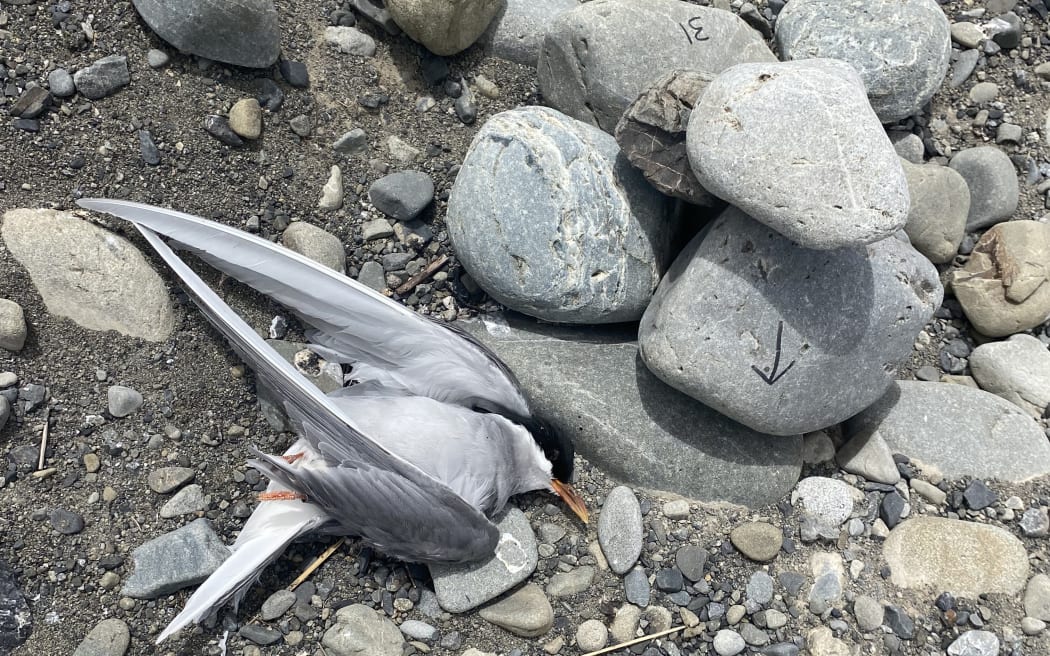
Aftermath: a dead tern, one of many killed by the feral cat. Photo: Department of Conservation
Stone Cold Killers
On November 21, 2025, New Zealand Conservation Minister Tama Potaka announced that feral cats would be added to the Predator Free 2050 eradication strategy - joining rats, possums, and mustelids on the national kill list. He called feral cats "stone cold killers."
The numbers back him up. New Zealand has an estimated 2.4 million feral cats. Over 90 percent of the 3,400 public submissions on the proposal supported their inclusion. This was not close.
In the weeks before the announcement, feral cats had also been caught killing over 100 short-tailed bats in one week near Ohakune, and driving the southern dotterel toward extinction on Stewart Island.
Full DOC media release on the captured cat
RNZ in-depth: Feral cats added to Predator Free 2050
The Pattern
This is what a single feral cat does when it reaches an isolated colony. Not a pack. Not a coordinated effort. One animal, acting on instinct, unraveling conservation programs that took years to build.
Cat advocates love to say outdoor cats are "part of the ecosystem." New Zealand is learning, the hard way, what that actually means. The ecosystem cannot afford them.
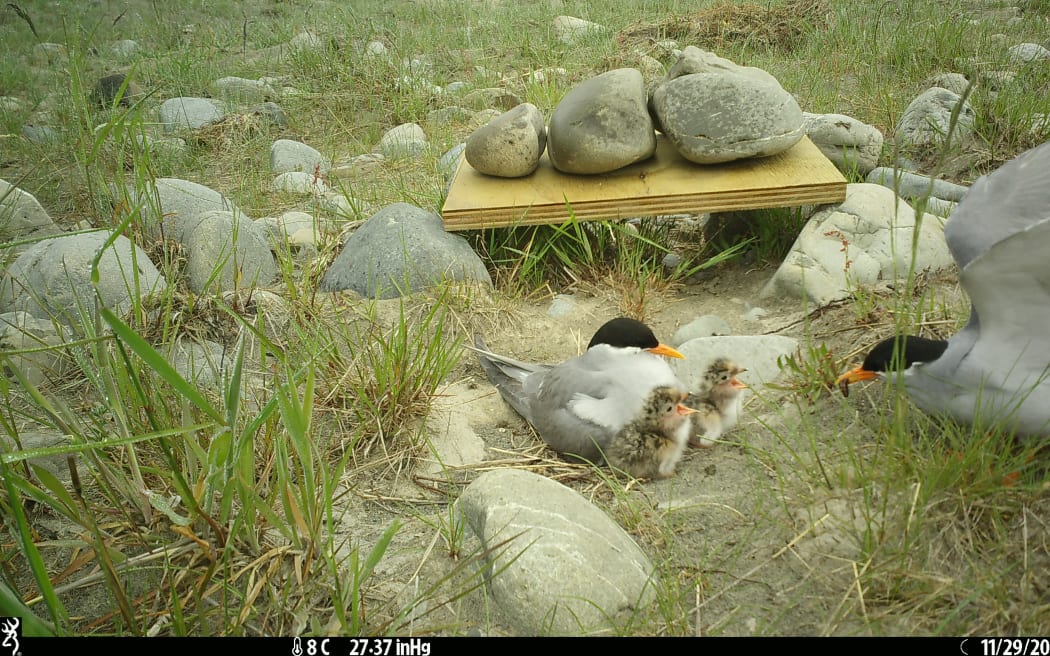
A black-fronted tern family - the kind of scene the Waiau Toa colony may not see again for years. Photo: Department of Conservation
The 206 nests recorded across six monitored colonies this season now have a better chance. But the terns at Waiau Toa are functionally gone. It will take years - if the colony recovers at all.
One cat did that.