
In 2009, cholera swept through northern Vietnam. Thousands of people got sick. Health authorities scrambled to identify the source. What they found was not contaminated water or spoiled vegetables. It was dogs.
Specifically, dogs trafficked across international borders from Laos and Thailand into Vietnamese slaughterhouses, carrying Vibrio cholerae O1 in their systems and spreading it through the meat supply chain.
The Molecular Trail
Researchers publishing under the title Imported Dogs as Possible Vehicles of Vibrio Cholerae O1 traced the outbreak with molecular precision. They isolated Vibrio cholerae from dogs held in Hanoi slaughterhouses on May 8, 2009, and from dog transport cages in Thanh Hoa province on May 12.
Using MLVA (Multiple Loci Variable-Number Tandem Repeat Analysis) on 170 bacterial isolates, they demonstrated that the cholera clone found in the dogs was the same clone found in human patients. Not similar. The same. The dogs had been imported from Laos and Thailand, countries where cholera strains circulate freely, and the bacteria hitched a ride through the meat trade straight into northern Vietnamese kitchens.
Between 2006 and 2010, Vietnam recorded 3,646 cholera cases, five times higher than the 2001-2005 period. The WHO documented a 20-fold increased risk of cholera infection associated with consuming dog meat.
A Supply Chain That Crosses Borders Without Checks
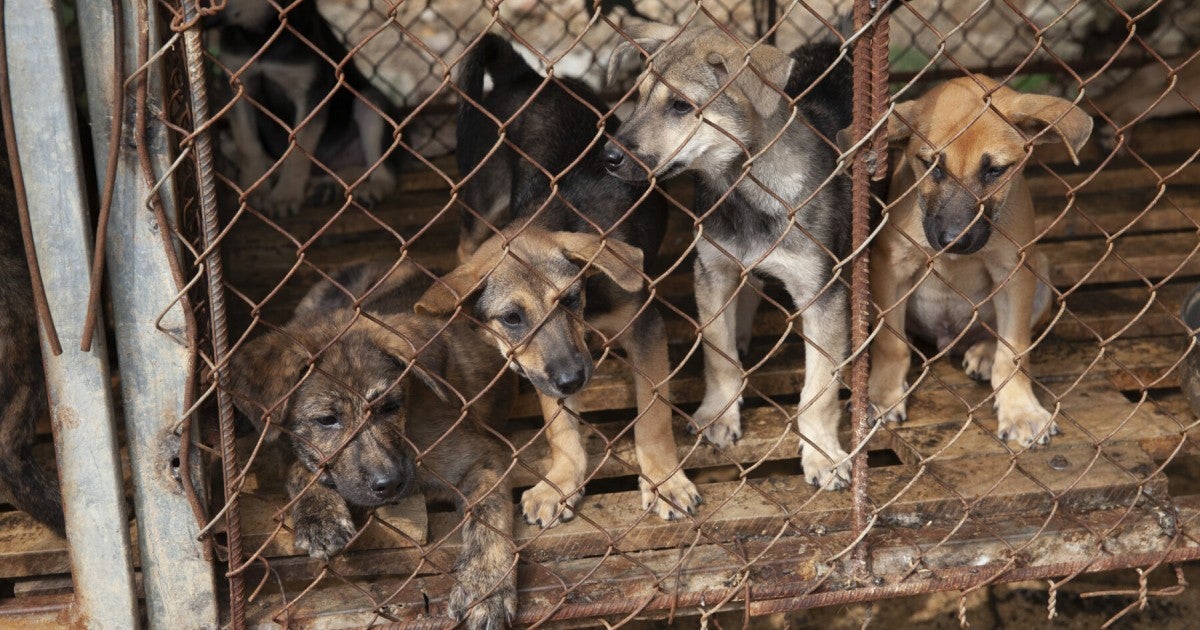
The dog meat trade in Vietnam processes roughly 5 million dogs annually, making it the second-largest consumer market after China. A significant portion of that supply is trafficked from neighboring countries. Dogs travel hundreds of miles crammed into wire cages on trucks, crossing from Thailand into Laos, from Laos into Vietnam, with no quarantine, no veterinary checks, no health certificates, and no documentation of any kind.
These are not farm-raised animals with known health histories. They are strays caught off streets, pets stolen from yards, dogs of unknown vaccination status from regions where rabies and cholera are endemic. They mix in transit, share bodily fluids, and arrive at slaughterhouses carrying whatever pathogens they picked up along the way.
In regulated livestock trade, animals crossing international borders must meet veterinary requirements, undergo quarantine periods, and carry health documentation. The dog meat supply chain operates entirely outside these systems.
Not Just Cholera
The same unregulated pipeline that delivered cholera also delivers rabies. A study of Vietnamese dog butchers found that 28.3% reported direct risk exposure during slaughter, including bites, cuts from contaminated knives, and handling visibly sick or dead dogs. In the Ba Vi district outbreak of 2007, 30% of human rabies deaths were linked not to dog bites but to slaughter and butchery exposure. People died from processing the meat, not from being attacked.
Vietnam recorded 89 human rabies deaths in 2024 alone. Twenty-seven of those were in the first three months of the year. In response, the prime minister issued Directive No. 22, ordering provinces to strengthen rabies prevention. The directive specifically acknowledged the role of the dog meat trade.
The Pattern Is Clear
Unregulated animal supply chains breed disease outbreaks. This is not controversial. It is the reason every developed country built veterinary inspection systems, cold chains, and food safety laws for their livestock industries. Beef, pork, and chicken went through the same process over the past century. The diseases were the same: bacterial contamination, parasitic infection, zoonotic transmission. The solution was the same: regulate the supply chain.
The dog and cat meat trade has not gone through that process. There is no inspection. There is no cold chain. There is no traceability. And when pathogens cross three national borders inside a cage full of sick dogs, nobody tracks where they end up until people start showing up at hospitals.
South Korea chose to end it entirely, passing a unanimous ban in January 2024. Indonesia has a ban bill in its 2026 legislative agenda, backed by four major parties and supported by 93% of the public. Vietnam's government has acknowledged the problem. The question is whether regulation comes before the next outbreak or after it.
Sources: ResearchGate (Cholera/dog import study); WHO Vietnam; PMC 8592344; ScienceDaily (Vietnam rabies cases 2009); FOUR PAWS SE Asia Report