
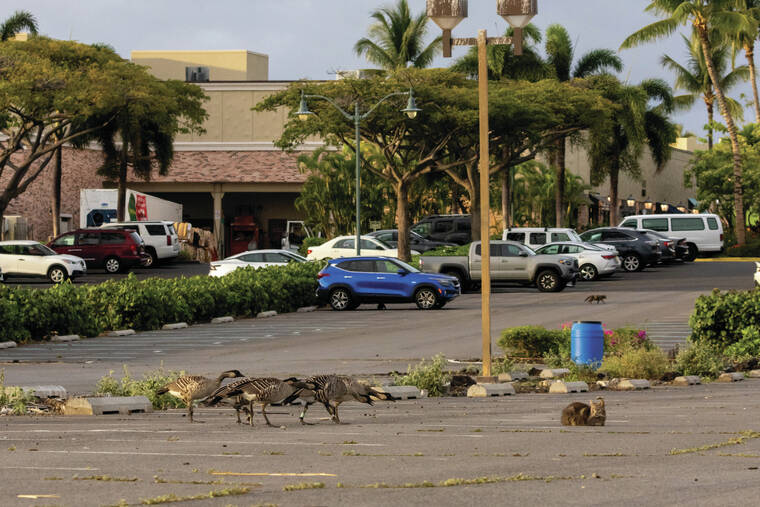
Nene geese forage in a parking lot while a feral cat sits nearby. This is the coexistence cat advocates celebrate. Photo: West Hawaii Today
A male nene - Hawaii's endangered state bird, a species brought back from the edge of extinction through decades of captive breeding - was struck and killed by a car in Hilo. It was crossing a road to reach a feral cat feeding station.
Its gosling had already died months earlier. Cause of death: toxoplasmosis, a parasitic disease spread exclusively through cat feces.
This is the story that finally pushed Hawaii County to act.
Bill 51
On December 26, 2025, Hawaii's Big Island enacted a ban on feeding feral cats on county property. Bill 51 passed the Hawaii County Council 6-2. Fines start at $50 for a first offense and escalate to $500 for repeat violations.
Mayor Kimo Alameda let the bill take effect without signing it - a political hedge that tells you everything about how toxic this issue is. He would not put his name on it, but he would not stop it either.
Priscilla Presley publicly opposed the ban. She called it inhumane.
The endangered nene walking into traffic to eat cat food - that, apparently, was fine.
Fortune: Hawaii bans feeding feral cats to protect endangered goose
The Toxoplasmosis Pipeline
Toxoplasma gondii can only complete its reproductive cycle inside a cat. Infected cats shed millions of oocysts in their feces. Rain washes the oocysts into waterways, soil, and eventually the ocean.
In Hawaii, the results have been catastrophic for native wildlife that evolved without mammalian predators and has zero resistance to cat-borne diseases.
The DLNR's Dawn Chang put it plainly: toxoplasmosis is the chief cause of infectious disease death for both nene and the critically endangered Hawaiian monk seal.
The monk seal numbers are brutal. Only about 380 remain in the main Hawaiian Islands. Every single monk seal diagnosed with toxoplasmosis - all 12 to 15 of them - has died. There is no treatment. A 100 percent fatality rate.

A feral cat colony in a Hawaii parking lot. Feeding stations like this attract endangered wildlife into danger zones. Photo: West Hawaii Today
NOAA: The toll of toxoplasmosis on Hawaiian monk seals
The Feeding Station Problem
Cat feeding stations do not just feed cats. They create concentrated zones of feces, attracting endangered birds with easy food while surrounding them with the parasites that kill them.
The nene that died crossing the road in Hilo was not confused. It knew exactly where the food was. The feeding station had trained it, along with other wildlife, to approach a location saturated with Toxoplasma oocysts.
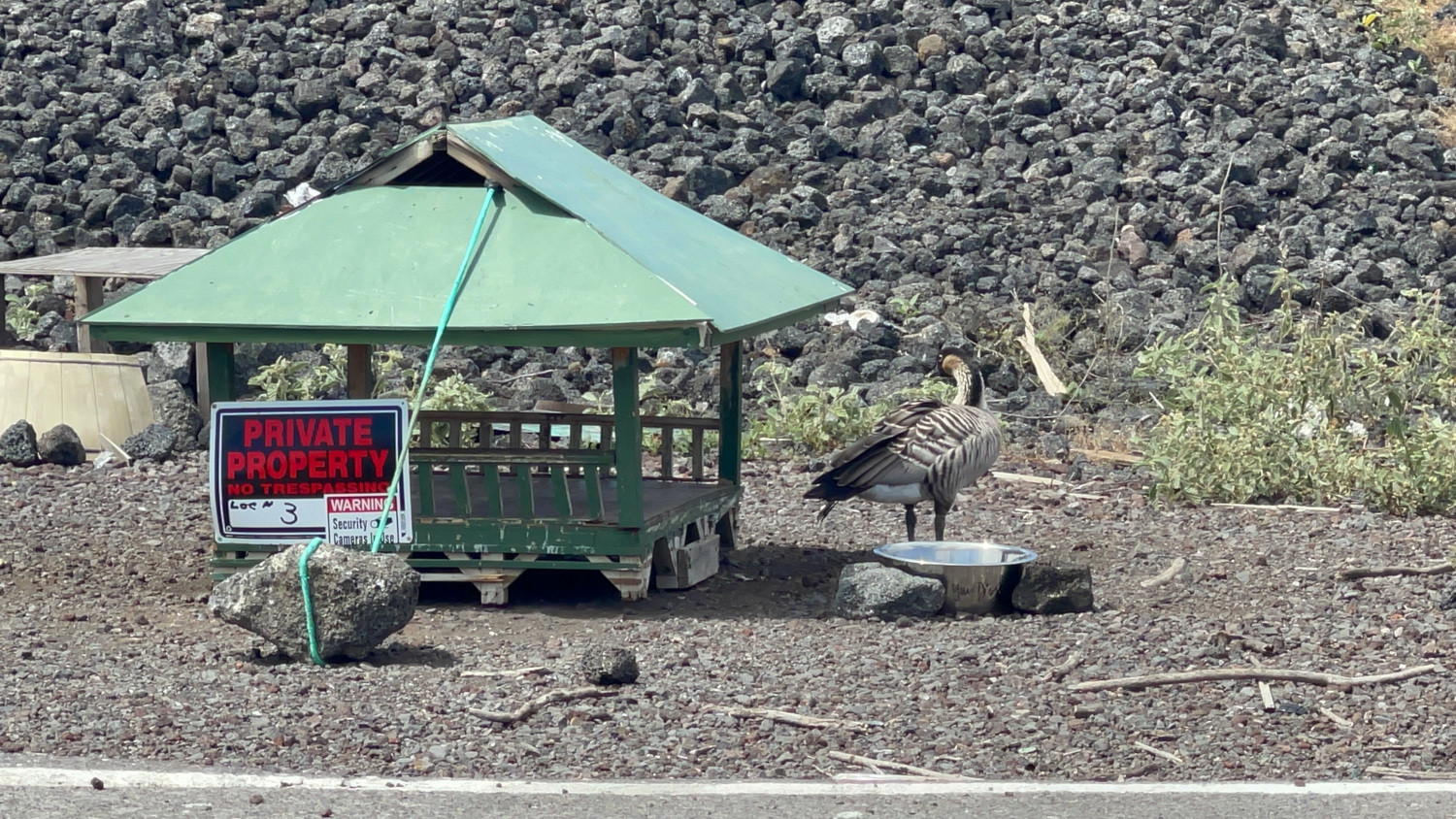
A nene goose stands next to a cat feeding station. Photo: Big Island Video News
This is what "compassionate" colony management looks like in practice: endangered birds eating cat food next to piles of parasite-laden feces, then dying of brain infections or getting hit by cars.
Fifty Dollars
The fine for feeding feral cats on county property in Hawaii is fifty dollars. The nene took forty years and millions of dollars to bring back from 30 individuals to a population of around 3,800. A monk seal is one of the rarest marine mammals on Earth.
Fifty dollars. That is what Hawaii decided this is worth.