
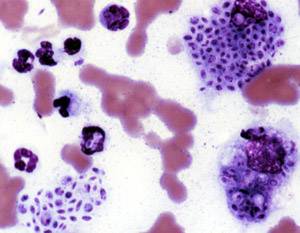
Sporothrix brasiliensis: The Cat-Borne Super Fungus
Brazil is in the grip of the world's largest sporotrichosis epidemic, and cats are the primary transmission vector. The fungus responsible, Sporothrix brasiliensis, spreads through bites, scratches, and contact with wound discharge from infected cats. It causes painful, ulcerating skin lesions in humans that can take months to heal and, in immunocompromised individuals, can become systemic and fatal.
The fungus has now spread beyond Brazil to Argentina, Paraguay, Chile, and the United Kingdom.
How Cats Spread It
Unlike other forms of sporotrichosis, which are transmitted through soil and plant matter, S. brasiliensis has adapted to spread directly from animal to animal and animal to human. Domestic cats — especially free-roaming males — develop severe infections with high fungal loads in their skin lesions, nasal passages, and claws. Every bite, every scratch, every drop of wound discharge is a potential infection event.
A 2025 CDC study documented the fungus spreading across the Triple Frontier region where Argentina, Brazil, and Paraguay meet. Researchers identified 9 confirmed cases across 7 households in Puerto Iguazu, Argentina, during an 8-month period. Molecular analysis confirmed direct cat-to-human transmission. 58 percent of surveyed households with human cases contained infected cats.
CDC Emerging Infectious Diseases: Sporothrix brasiliensis in Argentina
Evolving in Polluted Cities
Research published in 2025 found that S. brasiliensis is rapidly diversifying in urban environments. Scientists identified 79 distinct genetic variants of the fungus. Exposure to urban pollutants — benzene, toluene, and polycyclic aromatic hydrocarbons — appears to drive mutation. The fungus is evolving antifungal resistance in polluted environments, making treatment increasingly difficult.
The standard treatment, itraconazole, is becoming less effective against some strains. Amphotericin B — a toxic last-resort antifungal — may become the only option for resistant cases.
The UK Connection
The first cases of S. brasiliensis outside the Americas were reported in the United Kingdom. These cases involved individuals who had not traveled to South America, raising the possibility of local transmission chains. If the fungus establishes itself in European cat populations, the epidemic could go global.
Brazil's epidemic has produced over 12,000 human cases in Rio de Janeiro alone between 1998 and 2021. The fungus thrives wherever free-roaming cats are abundant, veterinary care is limited, and spay/neuter rates are low.
The Containment Problem
Sporotrichosis in cats is treatable, but treatment requires months of daily antifungal medication. Many cat owners cannot afford it. Feral cats receive no treatment at all. Each untreated cat becomes a mobile reservoir, spreading the fungus to every animal and human it encounters.
The solution is the same as every other cat-borne disease: keep cats indoors, sterilize feral populations, and stop treating free-roaming cats as a natural part of the urban landscape. They are not natural. They are vectors.
A fungus that evolved in Brazilian soil has found a better host: your neighbor's outdoor cat. And it is crossing borders.
Last edited: