
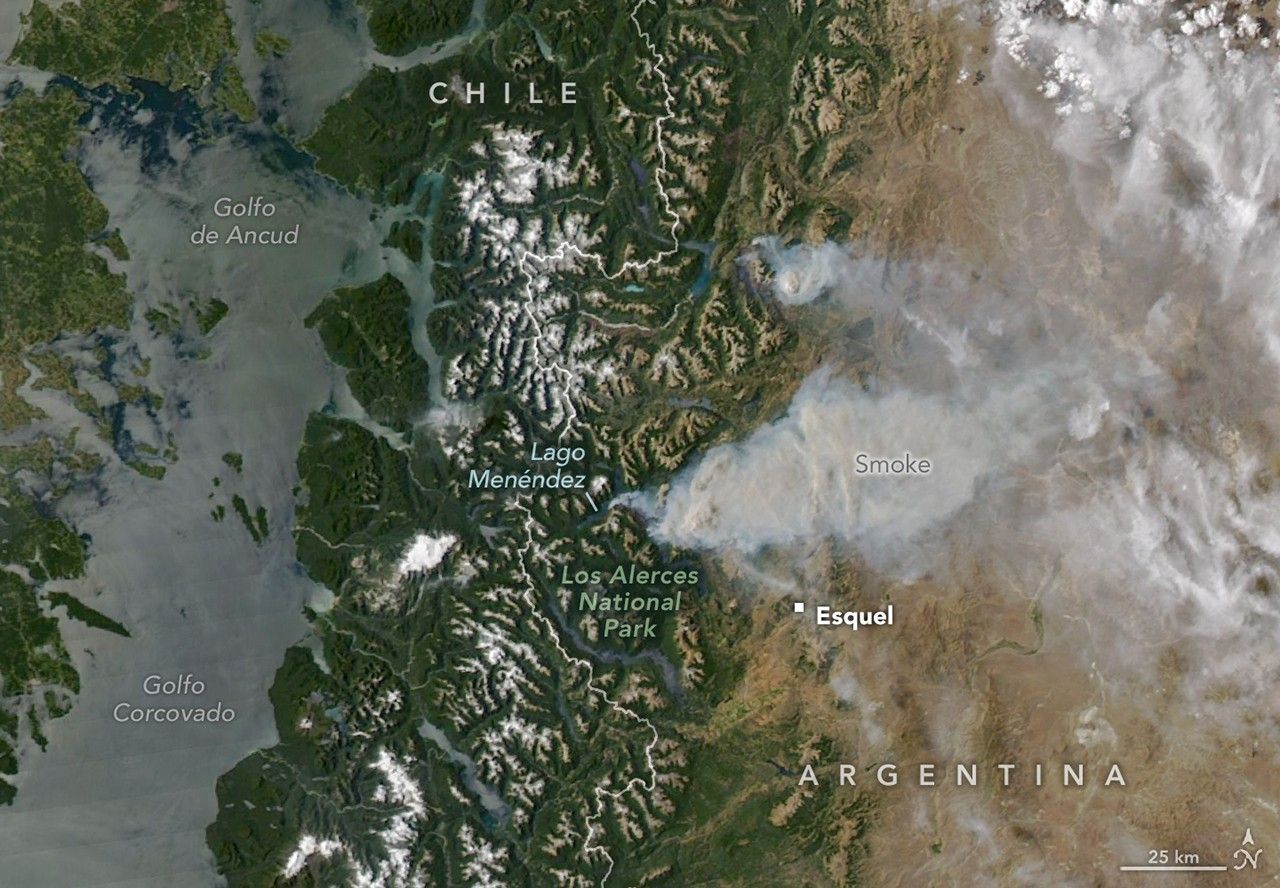
Patagonia Is Burning
Wildfires across Argentina's Patagonia region have scorched over 50,000 hectares — more than 450 square kilometers — including parts of Los Alerces National Park, a UNESCO World Heritage Site. Four national parks are simultaneously under threat. Ancient alerce trees, which can live over 3,600 years, are being destroyed.
Thousands of residents have been evacuated from Chubut province, particularly near the town of Epuyen. Containment remains partial.
The Ancient Trees
Alerce trees (Fitzroya cupressoides) are among the oldest living organisms on Earth. A specimen in Los Alerces National Park was dated to approximately 5,000 years old in a 2022 study, potentially making it the oldest tree ever documented. These trees grow in cool, wet Patagonian forests that historically rarely burned.
Climate change has altered the fire regime. A Yale E360 analysis found that warming has tripled the odds of these fires occurring. Patagonia's fire season is now longer, hotter, and drier than at any point in recorded history. Trees that survived five millennia of natural conditions are burning in fires driven by human-caused climate change.
Yale E360: Warming Tripled Odds of Patagonia Wildfires
The Budget Cuts
President Javier Milei's austerity program slashed Argentina's National Fire Management Service budget by 71 percent in real terms. Fewer firefighters. Less equipment. Slower response times. The cuts were made in the name of fiscal discipline. The fires do not care about fiscal discipline.
When the first fires broke out, response teams were understaffed and under-equipped. Volunteer firefighters — a fixture of Argentine fire response — were left without logistical support. International assistance was requested but took days to arrive.
Buenos Aires Times: 50,000 Hectares Destroyed in Patagonia
The Scale
50,000 hectares is roughly the size of Lake Tahoe. Four national parks are affected simultaneously. The fires are burning in terrain that is difficult to access by road, limiting ground-based firefighting to areas near population centers. Aerial tankers and helicopters are the primary suppression tools, and Argentina has fewer of them after the budget cuts.
The fires are not yet contained. If current conditions persist — and weather forecasts suggest they will — the total burn area could double before the southern hemisphere autumn brings cooler, wetter conditions.
Bulletin of Atomic Scientists: Why Patagonia Burns
What Is Lost
When a 3,600-year-old tree burns, it is gone. There is no replanting that timeline. These trees were seedlings when the Trojan War was fought. They were mature when Rome fell. They survived every natural disaster of the last four millennia. They did not survive a combination of climate change and a government that decided fire prevention was too expensive.
Milei's austerity saves money. Patagonia's forests took 3,600 years to grow. The trade-off is not reversible.
Last edited: