

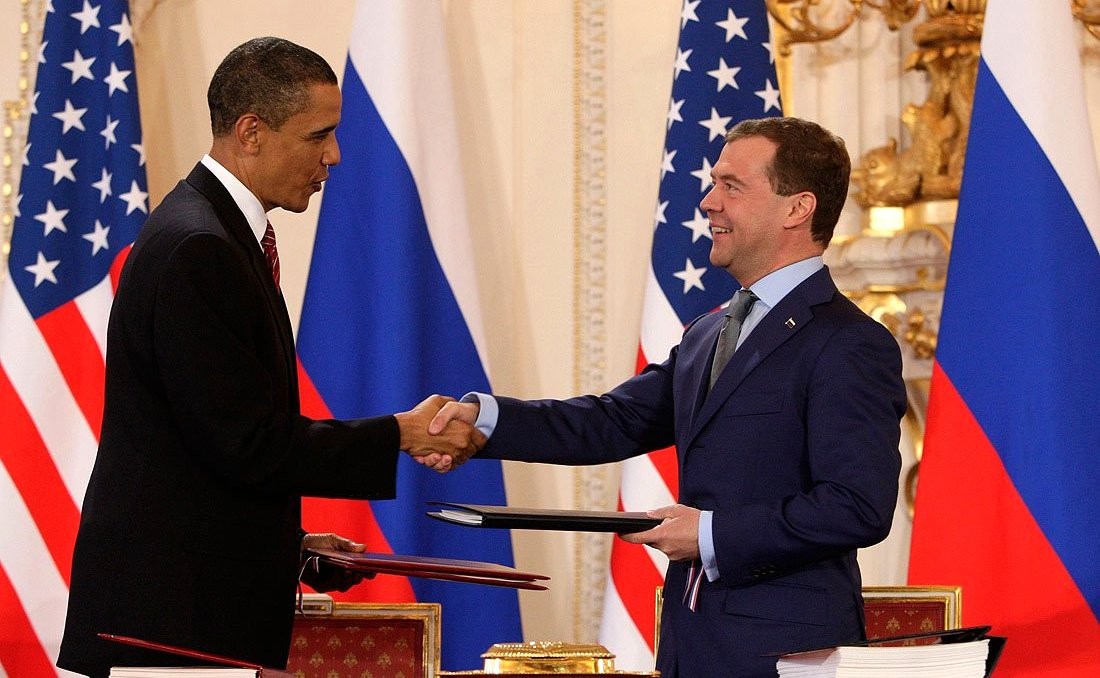
Fifty Years of Nuclear Limits Are Over
On February 5, 2026, the New START treaty between the United States and Russia expired. No replacement has been negotiated. No extension was agreed upon. For the first time since the early 1970s, there are no legally binding limits on the world's two largest nuclear arsenals.
New START had capped each side at 1,550 deployed strategic warheads, 700 deployed delivery vehicles, and 800 deployed and non-deployed launchers. It included verification measures — on-site inspections, data exchanges, and notification requirements — that gave each side confidence in the other's compliance.
All of that is now gone.
What Happened
Russia suspended its participation in New START in February 2023 following the invasion of Ukraine, though both sides continued observing the treaty's numerical limits. In late 2025, Putin offered to voluntarily observe the limits for one more year — until February 5, 2027 — if the United States reciprocated.
Trump rejected the offer. He demanded a "new, improved and modernised" treaty that includes China. China, which has approximately 500 nuclear warheads compared to the US and Russia's roughly 1,550 each, has refused to participate in trilateral arms control.
Russia later said it would stick to the limits anyway if the US does. But "sticking to limits" without verification is not the same as a treaty. There are no inspections. No data exchanges. No legal obligation. Just a promise from two governments that do not trust each other.
NPR: Why the Nuclear Treaty Expiration Matters
What It Means
Without verification, neither side knows with confidence what the other is doing. Russia could deploy additional warheads without notification. The US could expand its arsenal without accountability. Both sides are already modernizing their nuclear forces — the US is spending $1.7 trillion over 30 years on nuclear modernization; Russia is deploying new missile systems including the Sarmat ICBM and the Poseidon nuclear torpedo.
The UN Secretary-General called it a "grave moment." Arms control experts have warned that without binding limits, a new nuclear arms race is not just possible but probable.
Al Jazeera: Russia Says It Will Stick to Treaty Limits If US Does
The History
The era of bilateral nuclear arms control began with SALT I in 1972. For 54 years, through SALT II, INF, START I, START II, SORT, and New START, the US and Russia maintained some form of legally binding limit on their nuclear arsenals. Each treaty was imperfect. Each was criticized. But each provided a framework for managing the most dangerous weapons ever created.
That framework is now gone. The 54-year experiment in nuclear arms control ended on February 5, 2026, not with a bang but with an expiration date that nobody bothered to extend.
The Silence
The expiration of New START received remarkably little attention in the American media. A treaty governing weapons capable of ending human civilization lapsed, and it competed for coverage with tariffs, shutdowns, and social media trials.
There are approximately 12,100 nuclear warheads on the planet. The two countries that own 90 percent of them no longer have a legal agreement limiting their deployment. And the conversation about what replaces that agreement has not started.
This is what the end of arms control looks like. Not a crisis. Not a confrontation. Just a quiet expiration and a silence where a plan should be.
Last edited: