
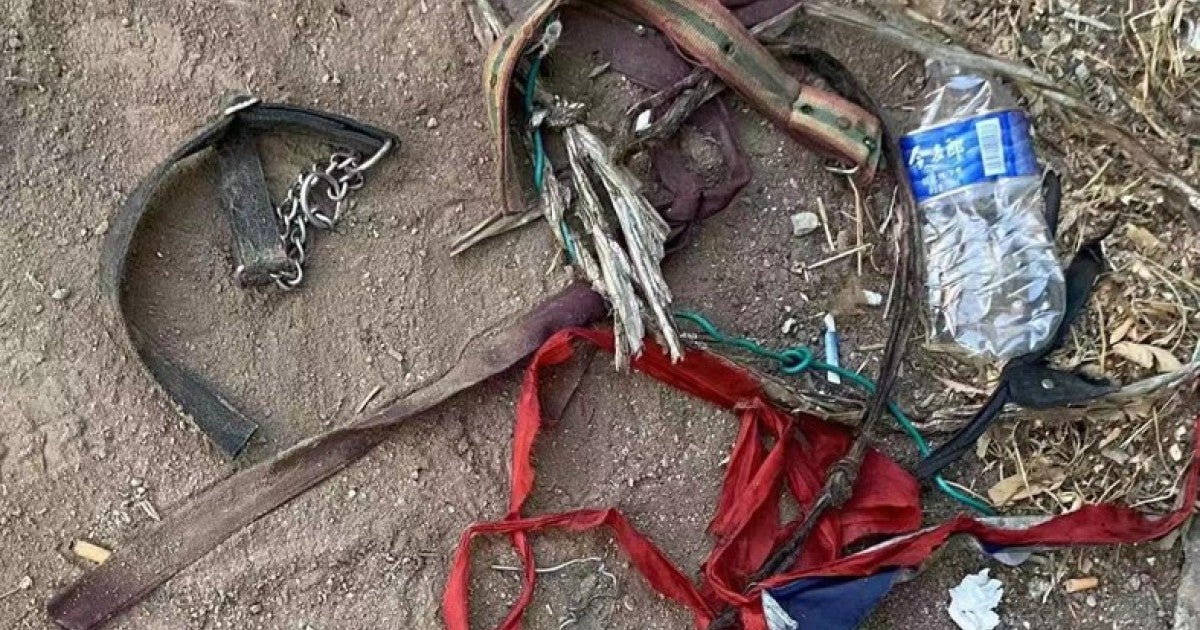
In Fufeng County, Shaanxi Province, Chinese police raided an illegal slaughterhouse and rescued 126 dogs. Among the carcasses and the blood, investigators found something that told the whole story in a single image: a pile of pet collars. Leashes. Tags. The dogs on that kill floor were not strays bred for food. They were pets stolen from families.
This is the supply chain that puts meat on the table in markets across Southeast Asia. And the health implications go beyond what most people imagine.
Your Pet's Medicine Is Now in Someone's Dinner
When a family dog is stolen and sold to a slaughterhouse, it brings its entire veterinary history into the food chain. Flea treatments containing fipronil and permethrin. Antiparasitic drugs like ivermectin. Antibiotics prescribed for infections. Anti-inflammatory medications.
In regulated meat production, there are mandatory withdrawal periods. A cow given antibiotics cannot be legally slaughtered until the drug has cleared its system, and residue testing confirms it. This ensures the person eating the steak is not also consuming veterinary pharmaceuticals.
In the dog meat trade, none of this exists. There are no withdrawal periods because there is no regulation. There is no residue testing because there is no inspection framework. A dog that received its last flea treatment yesterday can be on a plate tomorrow, and nobody checks what chemicals are in that meat.
Poison as a Harvesting Tool
It gets worse. According to documentation by the Humane Society, traders across Southeast Asia routinely use potassium cyanide and strychnine as poisoned bait to catch stray dogs. The dogs eat the bait, collapse, and are collected for slaughter.
Cyanide and strychnine are lethal poisons. There is no safe consumption level for humans. And yet the carcasses of dogs killed by these chemicals enter the food supply with zero decontamination, zero testing, and zero oversight. The consumer has no way of knowing whether the meat on their plate came from a poisoned animal.
No Farms, No Traceability
A four-year investigation by Animals Asia found zero evidence of large-scale dog breeding facilities supplying the Chinese meat trade. The dogs come from three sources: stolen pets, strays captured off streets, and dogs sold by owners who can no longer keep them. There is no farm-to-fork traceability because there are no farms.
This means the health history of every dog in the supply chain is completely unknown. Vaccination status, disease exposure, chemical treatments, parasitic infections: all invisible. Roughly 38% of dogs in rural China receive no vaccinations at all. The rest may carry any combination of pathogens and pharmaceutical residues.
German shepherds, Labradors, huskies, golden retrievers: these breeds were found alive at slaughterhouses. Thieves ride motorbikes with wire cages, lasso dogs with snares, and drag them until they stop fighting. The pet theft problem has become so severe that communities in Vietnam and Indonesia have resorted to vigilante violence against suspected dog thieves, creating what researchers describe as intense societal unrest.
The Consumer Pays Twice
First in health risk. Dog meat carries a documented 20-fold increased risk of cholera, a 20x increased bacterial infection risk compared to regulated protein, and measurable rates of rabies (20% positive at Hanoi slaughterhouses), trichinellosis (21% positive globally), and toxoplasmosis (50% seroprevalence in Vietnamese dogs).
Second in trust. When the supply chain is built on theft and poison, the consumer cannot make an informed choice about what they are eating. In every other meat industry, regulation exists to give consumers that basic assurance. In this one, it does not.
The countries moving to end the trade are not doing so because outsiders told them to. South Korea's unanimous 2024 ban, Indonesia's 93% public support for prohibition, Vietnam's prime ministerial directive: these are domestic decisions driven by domestic health data. The infrastructure is broken, and the people closest to it know it.
Sources: Humane World (Fufeng County raid); Animals Asia (four-year investigation); FOUR PAWS Health Report 2021; PMC 8592344; WHO